Unleash Urban Energy: The Bold Statement of Judge Typography
There is a raw, undeniable electricity found in the heart of the city. It is the spray paint on a concrete wall, the bold lettering on a vintage t-shirt, and the fierce independence of street art. If you are looking to channel that rebellious, high-impact energy into your digital or print projects, you need a typeface that understands the assignment. Enter Judge, a dynamic, graffiti-inspired display font that does more than just spell out words—it screams them. This is not just another addition to your design assets; it is a tool for visual storytelling that bridges the gap between the gritty appeal of street culture and the refined demands of modern branding.
The Intersection of Street Art and Commercial Design
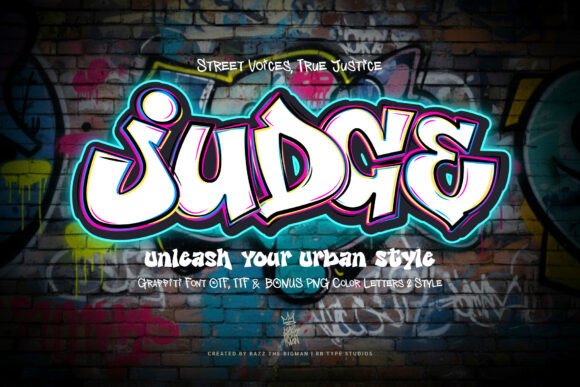
Judge is built for the bold. It carries an audacious essence that resonates deeply with streetwear culture, sport-themed designs, and album artwork. However, its utility goes far beyond music posters and urban apparel. In the realm of graphic design, finding a font that balances personality with legibility can be a challenge. Many script fonts or handwritten fonts sacrifice clarity for style, while standard sans serif fonts can feel too corporate or sterile. Judge strikes a unique balance. It captures the boundary-pushing spirit of graffiti but retains a structural integrity that makes it surprisingly versatile.
For designers and small business owners, this versatility is gold. Imagine you are launching a new streetwear line. You need a logo design that looks as good on a hang-tag as it does embroidered on a hoodie. Judge provides that immediate recognition. It signals to your audience that your brand is current, confident, and culturally aware. It is a typeface that doesn't just sit on the page; it demands attention, making it an excellent choice for brands looking to establish a strong, distinct voice in a crowded marketplace.
Practical Applications: Where Judge Truly Shines
Understanding where to use a premium font like Judge is key to maximizing its potential. Because it is a display font, it is designed to be used for headlines, logos, and short bursts of text where impact is the primary goal. It is not intended for body copy in long-form articles, but rather for the elements that draw the eye in.
Consider the world of packaging design. On a crowded shelf, a product has about three seconds to make an impression. A brand name set in Judge creates an immediate focal point, suggesting energy and authenticity. This works exceptionally well for beverage brands, fitness supplements, or artisanal goods targeting a younger, trend-conscious demographic.
In the digital space, social media graphics are the currency of engagement. Whether you are creating Instagram stories, YouTube thumbnails, or Facebook banners, Judge helps stop the scroll. Its thick lines and dynamic swashes ensure that your text remains readable even on small mobile screens, a crucial factor in web design and content creation today. It allows you to create marketing assets that feel cohesive and professional, elevating your visual consistency across all platforms.
Maximizing Your Creative Workflow
One of the most significant hurdles in design is finding the right assets that work seamlessly together. Judge is PUA-encoded, which stands for Private Use Areas. In practical terms, this means the font is fully accessible across virtually all design software, from Adobe Illustrator and Photoshop to Canva and Procreate. You don't need to be a typography expert to access the full character set.
This encoding ensures effortless access to all glyphs, swashes, and alternate characters. Why does this matter? It allows you to customize your creations with ease. If you are designing a logo and the standard lowercase 'a' doesn't quite fit the flow of the letter 'g' next to it, you can easily swap in a stylistic alternate that creates a perfect ligature. This level of customization is usually reserved for high-end typefaces, but it is essential for creating that "hand-crafted" look that defines modern typography.
Furthermore, when building a brand identity, consistency is king. Using the same typeface across your website headers, email newsletters, and print materials creates a psychological anchor for your customers. They begin to associate the visual style of Judge with your brand's voice—bold, justice-oriented, and stylish.
Strategic Font Pairing for Maximum Impact
While Judge is a powerhouse on its own, typography is often about the relationship between different styles. A common mistake is pairing a dynamic display font with another overly decorative font, resulting in visual chaos. To let Judge shine, it needs a partner that plays a supporting role.
For a clean, modern look, consider pairing Judge with a geometric sans serif font for your body text. The simplicity of a sans serif will provide the necessary breathing room, allowing the intricate details of Judge to take center stage. Alternatively, if you are aiming for a more editorial or high-fashion vibe, a simple serif font can create a sophisticated contrast that feels unexpected yet harmonious.
When testing font pairings, pay close attention to readability. While Judge is excellent for headlines, ensure that your secondary font is easy to read at smaller sizes. This hierarchy is fundamental to good design: the display font captures attention, and the body font delivers the information. By combining Judge with a neutral typeface, you create a visual hierarchy that guides the reader’s eye naturally through your content.
Licensing and Professional Use
For entrepreneurs and commercial designers, the legal aspect of using design assets is a critical consideration. Judge is a commercial font, meaning it is licensed for use in professional projects. This includes everything from digital products and merchandise to client work and marketing campaigns.
When you incorporate a premium font into a client's brand identity, you are offering them a level of exclusivity. Free fonts found on generic repositories are often overused, leading to brand dilution. By using a specialized typeface like Judge, you ensure that your client’s brand stands apart. Always review the specific licensing terms included with your download to ensure compliance, particularly if you are creating items for resale, such as t-shirts or posters. This professional diligence protects both you and your clients, ensuring that your creative work remains above board.
Injecting Personality into Editorial and Digital Layouts
Editorial design is evolving. The days of dry, text-heavy layouts are fading, replaced by dynamic, magazine-style presentations in both print and digital formats. Judge is an exceptional tool for editorial layouts, particularly for pull quotes, section headers, and cover lines.
If you are a blogger or content creator, think about how you can use typography to break up the monotony of long-form text. A bold header in Judge can re-engage a reader who might be skimming. It adds a layer of visual interest that makes the content feel more curated and valuable.
For digital products like e-books or online courses, the packaging matters just as much as the content. A cover design utilizing Judge suggests that the content inside is modern, edgy, and worth the investment. It moves your product away from looking like a simple document and toward looking like a professional publication.
The Final Word on Visual Communication
In the end, choosing a typeface is about choosing a voice. It is about deciding how you want to speak to your audience before they even read a single word of your copy. Judge offers a voice that is confident, unapologetic, and deeply rooted in the visual language of the streets. It is a typeface for the creators, the disruptors, and the innovators. Whether you are designing a poster for a local event, launching a global brand, or simply looking to add some edge to your personal projects, Judge provides the tools to make your vision a reality. It is more than just letters on a screen; it is a statement of intent.