Amara: A Typeface Built for Bold First Impressions
There’s a specific kind of project that demands more than just legibility. It asks for personality, for an immediate emotional response before a single word is consciously processed. You might be designing a logo for a new artisanal brand, creating a hero banner for a lifestyle blog, or crafting the cover for a limited-edition product line. In these moments, a standard sans-serif or a quiet serif can feel like whispering when you need to speak with confidence. This is where a specialized display typeface enters the conversation, offering a distinct voice that standard workhorse fonts simply don’t have.
Understanding the Amara Display Typeface
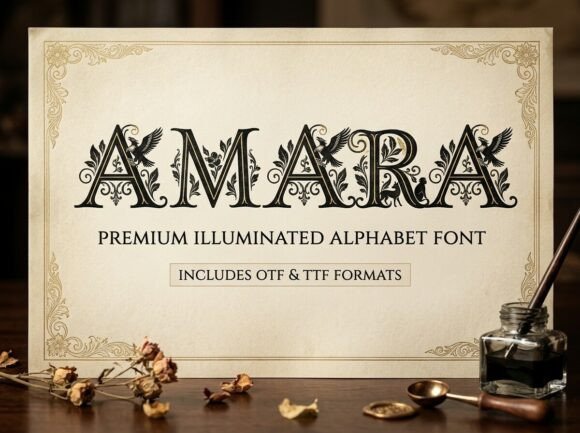
Amara is a premium decorative display font engineered for high-impact visual moments. Its design philosophy centers on creating each uppercase letter as a standalone artistic element. The forms are carefully crafted with unique details—perhaps subtle curves, distinctive terminals, or balanced negative space—that give the entire character set a cohesive yet striking personality. This isn't a font for setting long paragraphs of body text. Its strength lies in headlines, logos, and decorative initials where its full artistic expression can be appreciated. The visual weight and stylistic flair make it a natural choice for projects that need to break away from the ordinary and establish an immediate, memorable identity.
Practical Applications for Creative and Commercial Projects
The versatility of a well-designed display font like Amara lies in its ability to adapt to various creative contexts while maintaining its core character. Consider its role in brand identity development. A unique logo set in Amara can become the cornerstone of a brand's visual language, offering instant recognition. For packaging design, especially for boutique goods, cosmetics, or specialty foods, the font can elevate shelf appeal and communicate a sense of premium quality. In the digital realm, it shines in social media graphics, creating thumb-stopping posts and story highlights that increase audience engagement. It’s equally effective for website hero sections, blog title graphics, and promotional banners.
Beyond digital, its applications extend into tangible print materials. Think of editorial design for magazine covers or feature headlines, poster design for events or art prints, and invitations for weddings or galas where elegance and uniqueness are paramount. Entrepreneurs can use it for merchandise like tote bags or apparel, and marketers can leverage it for standout marketing assets such as email headers or digital product covers. The key is to deploy it in scenarios where its all-caps, decorative nature commands attention and supports the project's goals.
Strategic Font Pairing and Readability
Introducing a strong display typeface into your design toolkit requires thoughtful strategy, particularly regarding font pairing. Because Amara is an all-caps display font, it creates a natural hierarchy. It’s designed to be the star of the show in a headline or logo, not the supporting actor in a block of text. The most effective approach is to pair it with a highly legible, complementary font for any body copy or secondary information.
A sans-serif font with a clean, geometric structure often provides a beautiful modern contrast, letting Amara's decorative details pop without visual competition. Alternatively, a classic serif font can create a sophisticated, timeless pairing suitable for luxury branding or editorial layouts. For a more dynamic feel, pairing it with a simple script font for accents can work, but caution is needed to avoid clutter. The principle is balance: let the display font handle the emotional, high-impact work while a simpler typeface ensures readability for longer passages. Always test your pairings in context to see how they interact visually.
Key Considerations Before You Create
Before integrating any new design asset into your workflow, a few practical checks are essential. First, confirm the file formats match your software. The inclusion of both OTF and TTF files ensures universal compatibility across professional design applications like Adobe Illustrator, Photoshop, and InDesign, as well as common office and web platforms. Second, always review the font's specific character set. Knowing that Amara is an uppercase-only typeface upfront prevents mid-project surprises and guides how you structure your copy. This characteristic makes it ideal for acronyms, single-word logos, or titles where every letter is meant to be a focal point.
Finally, consider the licensing. For any project intended for commercial use—whether for a client, your own business, or merchandise—ensuring you have the appropriate commercial font license is non-negotiable. This protects both your project and the original creator. By understanding the font's intended use, its stylistic strengths, and how it fits within your broader typographic system, you can harness its full potential to create work that is not only visually arresting but also strategically sound and professionally executed.